
 0


 English
 italiano
 Polskie
 Nederlands
 Deutsch
 Español
 Український
Accueil / Nouvelles & Événements / Nouvelles de l'industrie / 12V Amp Hour Calculator: Convert Ah to Watt Hours and Estimate Runtime
-
 EXPÉDITION RAPIDE
-
 PRIX COMPÉTITIF
-
 EXCELLENT SERVICE APRÈS-VENTE

Recherche de produit
Nouvelles de l'industrie
2026-10-23
12V Amp Hour Calculator: Convert Ah to Watt Hours and Estimate Runtime
Content
- 1 What a 12V Amp Hour Calculator Really Measures
- 2 The 12V Amp Hour Formula, Step by Step
- 3 Why Watt Hours Matter More Than Amp Hours Alone
- 4 Estimating Runtime for Common 12V Loads
- 5 Charging a 12V Battery: How Many Solar Watts Do You Need?
- 6 Common Mistakes When Using an Amp Hour Calculator for 12V Systems
- 7 Matching Your 12V Numbers to Real Equipment
An amp hour calculator for 12V systems is one of those small tools that saves a lot of guesswork. Whether you are wiring a caravan battery, checking a gate opener, or planning a small solar setup, the basic question is the same: how long will the battery last, and how much energy do I need to put back? A 12V amp hour calculator helps you move between amps, hours and watt hours without losing track of the units. The arithmetic is simple, but the assumptions behind it are what keep a system reliable.
What a 12V Amp Hour Calculator Really Measures
Amp hours measure charge, not energy. One amp flowing for one hour is one amp hour. At a nominal 12V, one amp hour works out to about 12 watt hours, so a 100Ah battery has roughly 1,200Wh of nominal energy. The word “nominal” matters. A 12V battery is not always exactly 12.0V, and the usable capacity is lower than the label once you account for depth of discharge, temperature, age and the way the load behaves.
| Battery capacity | Nominal energy at 12V | Usable at 80% DoD | Runtime at 50W DC load |
|---|---|---|---|
| 50Ah | 600Wh | 480Wh | About 9.6 hours |
| 100Ah | 1,200Wh | 960Wh | About 19.2 hours |
| 200Ah | 2,400Wh | 1,920Wh | About 38.4 hours |
Those figures are a planning aid, not a promise. A lead-acid battery should not be run flat regularly, while a lithium battery may allow deeper discharge depending on its BMS and datasheet. The calculator is only as good as the depth-of-discharge value you put into it.
The 12V Amp Hour Formula, Step by Step
Most 12V amp hour calculators follow the same four steps. Once you know them, you can check a calculator’s answer or work it out on paper.
- Convert the load to amps. If the label gives watts, divide by 12. A 60W load draws about 5A at 12V.
- Multiply by the hours of use. Five amps for eight hours is 40Ah per day.
- Divide by the usable depth of discharge. At 80% DoD, 40Ah divided by 0.8 gives 50Ah.
- Add a margin. Ten to twenty percent covers inverter losses, ageing and cold weather. A 50Ah result becomes about 60Ah.
Here is a quick example. A 40W load on a 100Ah lithium battery with 80% usable capacity: 40W divided by 12V is about 3.3A. The usable capacity is 80Ah, so 80Ah divided by 3.3A suggests roughly 24 hours. In practice, the inverter may cut off before the battery is fully drained, and cold conditions can reduce capacity. Treat the result as an upper estimate and leave some reserve.
Why Watt Hours Matter More Than Amp Hours Alone
Amp hours without a voltage are incomplete. A 100Ah battery at 12V stores about 1,200Wh; a 100Ah battery at 24V stores about 2,400Wh; and a 100Ah battery at 48V stores about 4,800Wh. The amp hour number stays the same, but the energy doubles and quadruples. That is why it is safer to compare batteries in watt hours, especially when you are looking at different system voltages.
For a 12V system, the simple conversion is watt hours equals amp hours multiplied by 12. If you later move to a higher-voltage battery bank, run the same calculation with the new nominal voltage. A 12V amp hour calculator is a useful starting point, but it should not be used to compare a 12V battery directly with a 48V battery by amp hours alone.
Estimating Runtime for Common 12V Loads
Real loads rarely draw a steady current. A fridge cycles on and off, an inverter has idle draw, and a laptop charger does not pull its rated wattage all the time. A plug-in watt meter gives the best data. As a rough guide, here are typical 12V figures:
- LED light, 10W: about 0.8A at 12V
- Wi-Fi router, 15W: about 1.25A
- Ceiling fan, 30W: about 2.5A
- Portable fridge, 45–60W: about 3.8–5A while running, with a lower average once cycling is counted
- Laptop charger, 65W: about 5.4A
With a 100Ah battery and 80Ah usable, a 30W fan should run for around 32 hours in theory. A 50W load should run for about 19 hours. Remember to allow for inverter efficiency of roughly 85–90% and the battery’s low-voltage cutoff. If you want a plug-and-play option for small loads, our P700 portable power station offers 577Wh and a 700W output, which is a practical way to test real-world consumption before building a larger 12V bank.
Charging a 12V Battery: How Many Solar Watts Do You Need?
The same units work in reverse. To replace 50Ah in a 12V battery, you need about 600Wh before losses. If the charging path is 85% efficient, that becomes roughly 706Wh. With four peak sun hours per day, the panel size is about 176W, so a 200W panel is a sensible starting point. In winter, with shade, or with a flat-mounted panel, add more capacity or expect a longer charge time.
For a deeper walkthrough, see our article on sizing a solar panel to charge a 12V battery. For portable use, a foldable 200W panel is easy to pack and can feed a portable power station or a small 12V battery through an appropriate charge controller.
Common Mistakes When Using an Amp Hour Calculator for 12V Systems
- Mixing amp hours at different voltages. A 100Ah battery at 12V is not the same amount of energy as a 100Ah battery at 48V.
- Forgetting depth of discharge. A 100Ah lead-acid battery may regularly deliver only about 50Ah without shortening its life.
- Ignoring inverter losses and idle draw. A 500W inverter can consume 10–20W just by being switched on.
- Using cranking amps or reserve capacity as amp hours. They are different ratings and should not be entered into a 12V amp hour calculator as if they were capacity.
- Assuming a 12V battery is exactly 12.0V. The label is nominal; check the datasheet for charge and cutoff voltages.
- Ignoring temperature. Cold reduces usable capacity, especially for lead-acid batteries.
A calculator gives a clean number; a real installation has messy edges. Build in margin, use the battery manufacturer’s depth-of-discharge recommendation, and check peak current as well as average current.
Matching Your 12V Numbers to Real Equipment
Once you know your daily amp hours and peak amps, choose equipment that matches. Check continuous discharge current, BMS limits, inverter surge rating and charging current. For a small 12V system, a 100Ah lithium battery and a 300–500W inverter can cover lights, routers, fans and a small fridge. For larger loads or longer backup, step up to a 200Ah battery or a higher-voltage system. A portable station can be a simpler first step; the Alpha 2000 provides 2,048Wh and a 2,000W output for heavier occasional loads.
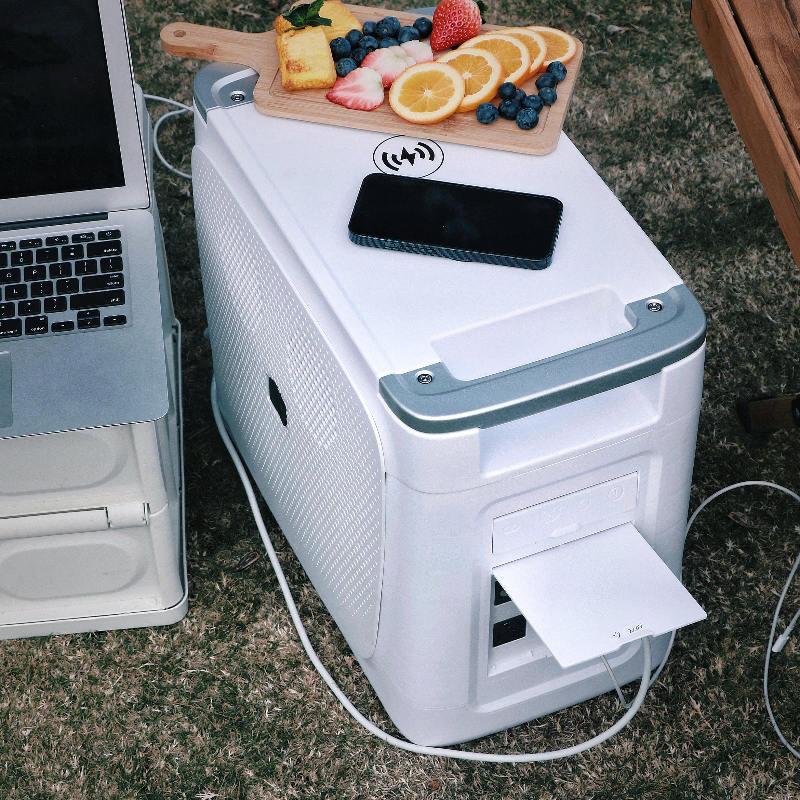 Alpha 2000 Portable Power StationA 2,048Wh LFP portable station with 2,000W AC output, suited to occasional heavier backup loads and mobile use.View Product →
At Unizsolar, we work with 12V batteries, solar panels, charge controllers and portable power systems every day. If you would like us to check your load list against a real battery and panel combination, contact our team and we will help you avoid the common sizing traps.
←
Aucun article précédent
→
Alternative au Tesla Powerwall : applications, critères de sélection et conseils pratiques
Produits connexes


Solutions
Entreprise
Informations de contact.
 +31610999937
 [email protected]
 De Werf 11, 2544 EH La Haye, Pays-Bas.
- WhatsApp: +852 65283075
QR Code
Droits d'auteur © 2023 Uni Z International B.V. VAT: NL864303440B01 Tous droits réservés
